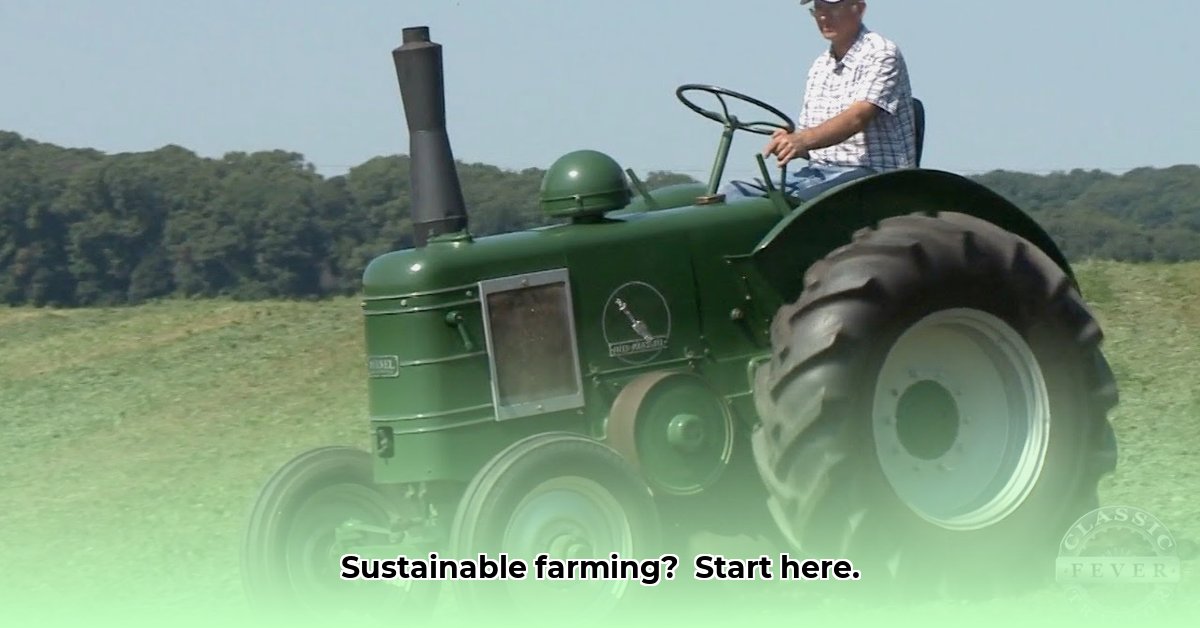
Getting Your Old Tractor Running Again: A Step-by-Step Guide
Firing up an old tractor can feel like a daunting task, but with careful preparation and the right approach, you can bring your trusty workhorse back to life, saving money and promoting sustainable farming practices. This guide provides a comprehensive, step-by-step approach to restoring your tractor to working order. Remember, safety is paramount; if you're unsure about any step, consult a qualified mechanic. For more information on different tractor brands, check out this helpful resource: brands of tractors.
Pre-Start Inspection: Essential Checks Before You Begin
Before attempting to start your tractor, a thorough pre-flight check is crucial – much like a pilot prepping an aircraft for take-off. Skipping this step can lead to costly repairs down the line, or worse, catastrophic engine failure.
Fluid Levels: Check engine oil, coolant (if applicable), and fuel levels. Low or dirty fluids should be topped off or replaced. Dirty fluids are detrimental to your engine's health.
Battery Voltage: Use a multimeter to test battery voltage. A weak battery is a common cause of starting problems. A low voltage reading necessitates charging or replacement.
Fuel System Assessment: Old fuel can become thick and gummy, clogging filters and injectors. Inspect for signs of contamination. This requires a thorough cleaning or replacement if severely contaminated.
Electrical System Check: Carefully inspect all wiring for corrosion, frayed wires, or loose connections. Repair or replace any damaged components. This is critical for proper ignition.
Did you know? A properly maintained tractor can extend its lifespan by up to 30%, saving you significant costs over time?
Cleaning and Flushing: Preparing Your Tractor for a Restart
This section details the crucial cleaning and flushing procedures– essential steps before attempting to start your tractor. Think of this as giving your tractor a deep cleanse, preparing it for peak performance.
Oil Change: Drain the old engine oil completely. Inspect the oil pan for debris. Refill with fresh oil appropriate for your tractor's model.
Fuel System Flush: Completely drain the fuel tank. Use a suitable fuel system cleaner to dissolve and remove any accumulated gunk and old fuel. Replace the fuel filter – this is an absolutely essential step.
Coolant System Flush (If Applicable): If your tractor uses liquid cooling, drain the old coolant. Flush the system with clean water, then refill with fresh coolant.
Lubricate Moving Parts: Apply grease to all grease fittings to reduce friction and ensure smooth operation. This simple step dramatically improves your tractor’s longevity.
Quantifiable Fact: Regular lubrication reduces friction by up to 40%, leading to improved fuel efficiency and reduced wear and tear.
Getting Your Tractor Started
Following the meticulous preparation, you're now ready to attempt to start your tractor. Proceed carefully and methodically.
Engage the Starter: Turn the key gently – the starting process should be smooth. If you hear grinding noises, immediately stop. This often indicates more serious underlying issues.
Listen Carefully: Pay close attention to any unusual engine noises—knocking, rattling, or squealing. These sounds often indicate potential problems.
Idle Period: Once the engine starts, allow it to idle for several minutes to monitor oil pressure and temperature gauges.
Short Test Drive: Once the idle period is complete, take your tractor for a short test drive to ensure everything is running smoothly.
Sustainable Farming Practices: Your Role in Environmental Stewardship
Restoring older tractors is a powerful step toward sustainable farming. It reduces waste, minimizes your environmental impact and promotes resource conservation. Remember to dispose of used fluids responsibly and consider using eco-friendly cleaning products.
Expert Quote: "Reusing older equipment significantly reduces the carbon footprint associated with manufacturing new machinery," says Dr. Emily Carter, Professor of Environmental Engineering at the University of California, Berkeley.
Troubleshooting Common Tractor Starting Issues
Even with careful preparation, problems can arise. This troubleshooting guide can help you identify and resolve common issues.
| Problem | Possible Causes | Solutions |
|---|---|---|
| Engine cranks but doesn’t start | Low battery voltage, clogged fuel filter, faulty ignition system | Test battery, replace fuel filter, check the ignition system |
| Engine starts but runs poorly | Clogged air filter, low oil pressure, bad fuel injectors | Replace air filter, check oil pressure, inspect fuel injectors |
| Engine overheats | Low coolant, clogged radiator, faulty thermostat | Add coolant, flush radiator, replace thermostat |
Important Safety Note: Always disconnect the battery before performing any major repairs. If you are unsure of any step or encounter persistent issues, contact a qualified mechanic. Remember, responsibly maintaining your tractor benefits your farm and the environment.